
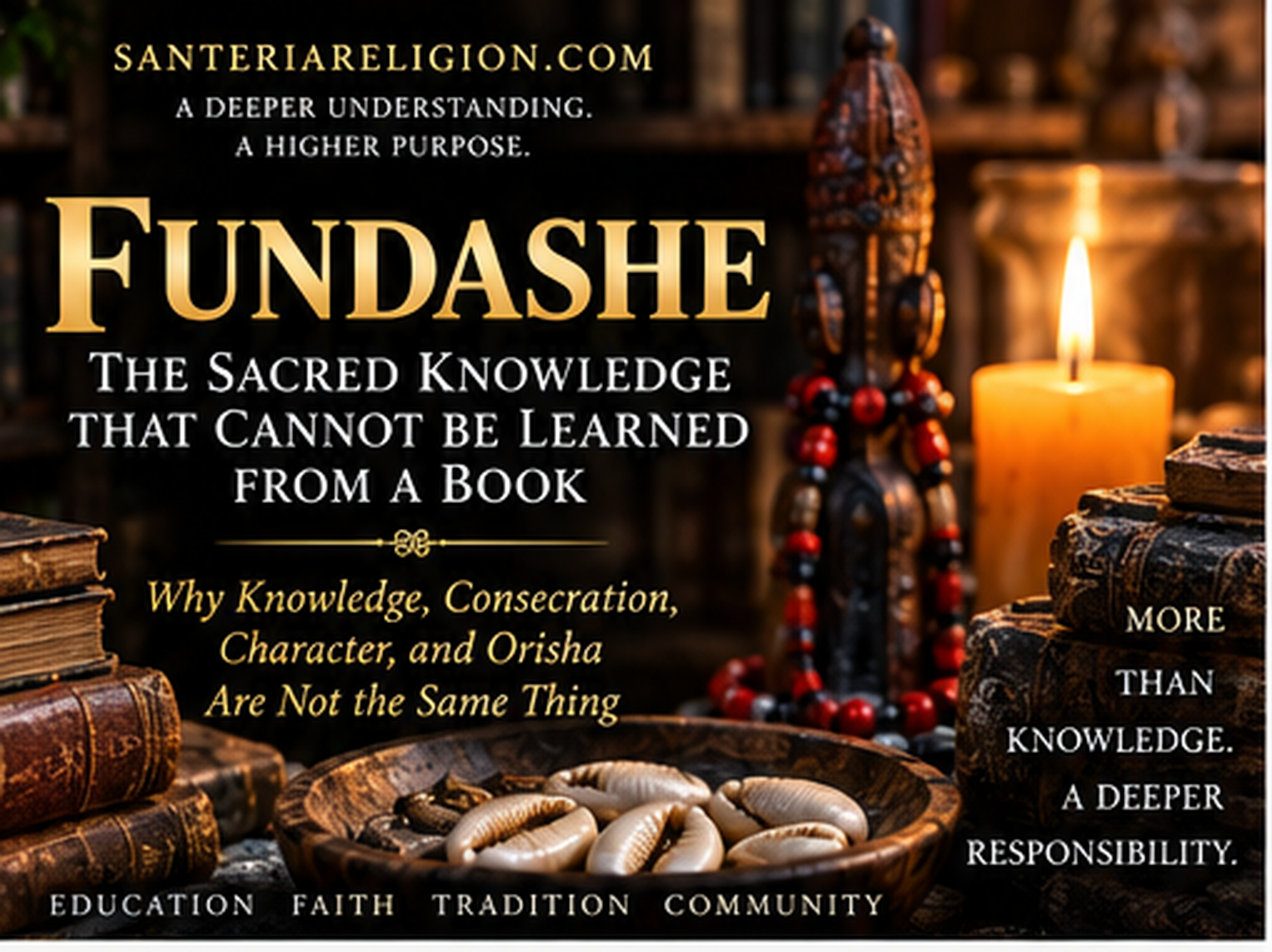
Books can teach Odú, history, prayers, and religious concepts. Fundashe reaches deeper. Keith Lawrence Miller explores why sacred understanding must be earned, why character matters to Orisha, and why spiritual authority carries responsibility.
There are people who know a great deal about Santería.
They know the names of the Orisha.
They know stories.
They know prayers.
They know herbs, colors, numbers, offerings, prohibitions, songs, ceremonies, and Odú.
Some have read dozens of books.
Some have studied for years.
Some can explain religious history better than many practitioners.
Knowledge matters.
I have spent much of my own life studying. My academic background taught me to investigate, compare sources, question assumptions, and keep searching when an answer seems incomplete.
Yet there is a point in religious life where information reaches its limit.
You can know what something means intellectually and still fail to understand what is happening spiritually.
That difference is where I understand Fundashe.
Fundashe Is Earned
Fundashe is sacred.
It is rare.
It carries weight.
I do not understand it as something a person automatically receives because they completed a ceremony, memorized material, acquired a title, or spent enough years around the religion.
Fundashe is earned.
Orisha knows the person.
They know what is in someone's heart.
They know how that person treats others when nobody is watching.
They know whether religious authority is being used to serve or to dominate.
They know whether knowledge is being protected or exploited.
They know whether the person is humble enough to receive something sacred without turning it into a weapon for ego.
Nothing is hidden from Orisha.
That matters because Fundashe carries power.
And power without character becomes dangerous.
A Book Can Teach Information
Books are valuable.
I write books.
I study books.
I believe serious practitioners should continue learning throughout their lives.
Books can preserve teachings that might otherwise disappear.
They can document history.
They can explain Odú.
They can organize religious concepts.
They can transmit vocabulary, prayers, stories, proverbs, and cultural knowledge.
A good book can save someone years of confusion.
Still, the written page has limits.
A book cannot consecrate you.
A book cannot build your relationship with Orisha.
A book cannot live through your mistakes.
A book cannot correct your character.
A book cannot give you spiritual perception.
A book cannot decide whether Orisha trusts you with more.
The written word can point toward understanding.
Fundashe has to be lived.
Knowing Odú and Hearing Odú Are Different Abilities
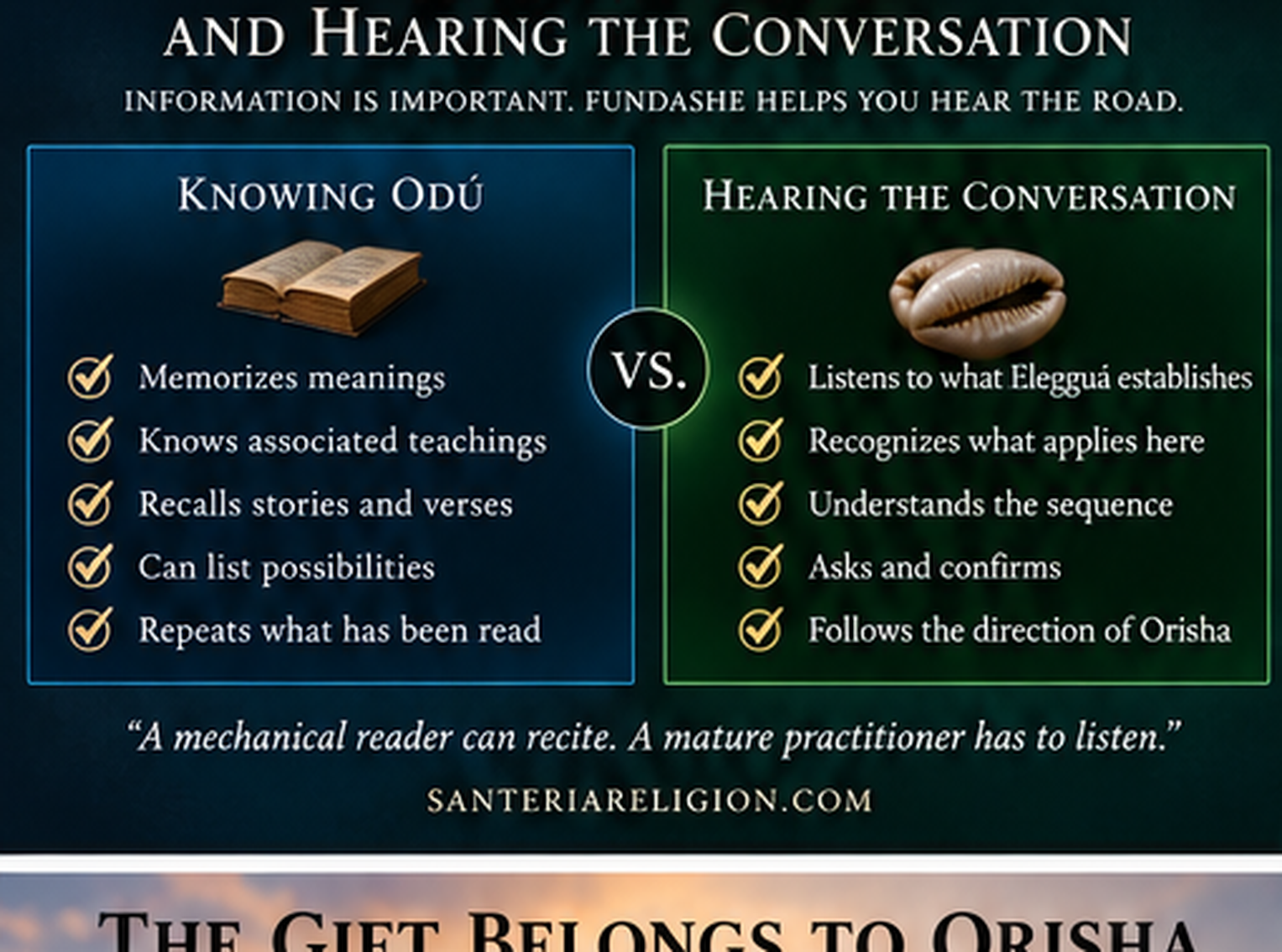
Diloggún makes this distinction especially clear.
A person can memorize every common teaching associated with an Odú and still produce a poor reading.
The problem is not necessarily ignorance.
The problem may be discrimination.
Which teaching applies here?
Which possibility is active?
What does the sequence mean together?
What did Elegguá establish?
Which interpretation has already been rejected?
Which Orisha is standing?
What needs to be followed further?
A mechanical reader can recite.
A mature practitioner has to listen.
That difference becomes enormous.
Odú contains vast bodies of information.
The practitioner cannot simply empty everything associated with a sign onto the client.
The consultation has direction.
Fundashe helps the practitioner recognize that direction.
Consecration Changes the Person
Consecration matters because religious knowledge in Ocha is relational.
Something happens through living with Orisha.
Your understanding changes.
Your perception changes.
The way you recognize spiritual patterns changes.
There are things that once seemed unrelated that suddenly become connected.
There are moments when an Orisha's presence is sensed before formal confirmation.
There are impressions that arise during a consultation.
There are relationships between signs that become clear before they can be reduced to an intellectual explanation.
Then the practitioner asks.
The shells confirm or reject.
Over years, these experiences accumulate.
The relationship itself becomes a teacher.
That is difficult to reproduce for someone whose only contact with the religion is textual.
They may know the same words.
They have not lived the same relationship.
Orisha Decide What You Are Allowed to Carry
I believe Fundashe is given according to what someone has earned.
That means spiritual capacity carries a moral dimension.
Purity of heart matters.
Loyalty matters.
Humility matters.
Service matters.
How the gift is used matters.
Orisha are not foolish.
They are not deceived by appearances.
Someone can perform humility publicly and carry arrogance privately.
Someone can speak beautifully about service while exploiting people.
Someone can claim devotion while using religion primarily for money, control, status, or admiration.
Human beings may fail to see those contradictions.
Orisha sees them.
That is why sacred ability should never be treated as entitlement.
If something is given, it should be protected.
Fundashe Can Be Lost
A sacred gift can be abused.
I believe Fundashe can diminish or be taken away when it is misused.
That possibility should make a practitioner cautious.
Religious authority creates temptation.
People listen to you.
People trust you.
People may reveal things they have told nobody else.
They may come frightened, sick, desperate, financially unstable, grieving, or confused.
They may believe that what you say carries the authority of Orisha.
That creates enormous responsibility.
A practitioner who exploits that vulnerability damages more than a client relationship.
They violate something sacred.
Fundashe should therefore create greater restraint as it deepens.
The more someone is entrusted with, the more carefully they should carry it.
Spiritual Ability Is Not a Performance
Modern culture rewards visibility.
The loudest person can appear to be the most knowledgeable.
The person with the largest audience can appear to have the most authority.
Confidence is often mistaken for competence.
Presentation is often mistaken for depth.
Religious life operates according to another standard.
A person can have extraordinary spiritual capacity and never become publicly famous.
An elder can quietly possess knowledge that cannot be measured by followers, views, credentials, or branding.
Someone can speak modestly and carry tremendous Ashé.
That is one reason sacred traditions require discernment.
Spiritual depth does not always advertise itself.
Titles Do Not Create Fundashe
Titles have meaning when they accurately describe responsibility, initiation, training, or religious office.
They should still never become substitutes for character.
A person can collect titles and remain spiritually immature.
They can receive ceremonies and remain selfish.
They can learn complicated religious material and remain dishonest.
They can become technically sophisticated and still misunderstand the responsibility attached to what they know.
Fundashe cannot be manufactured by introducing yourself impressively.
Orisha already knows who you are.
The Pure Heart Matters
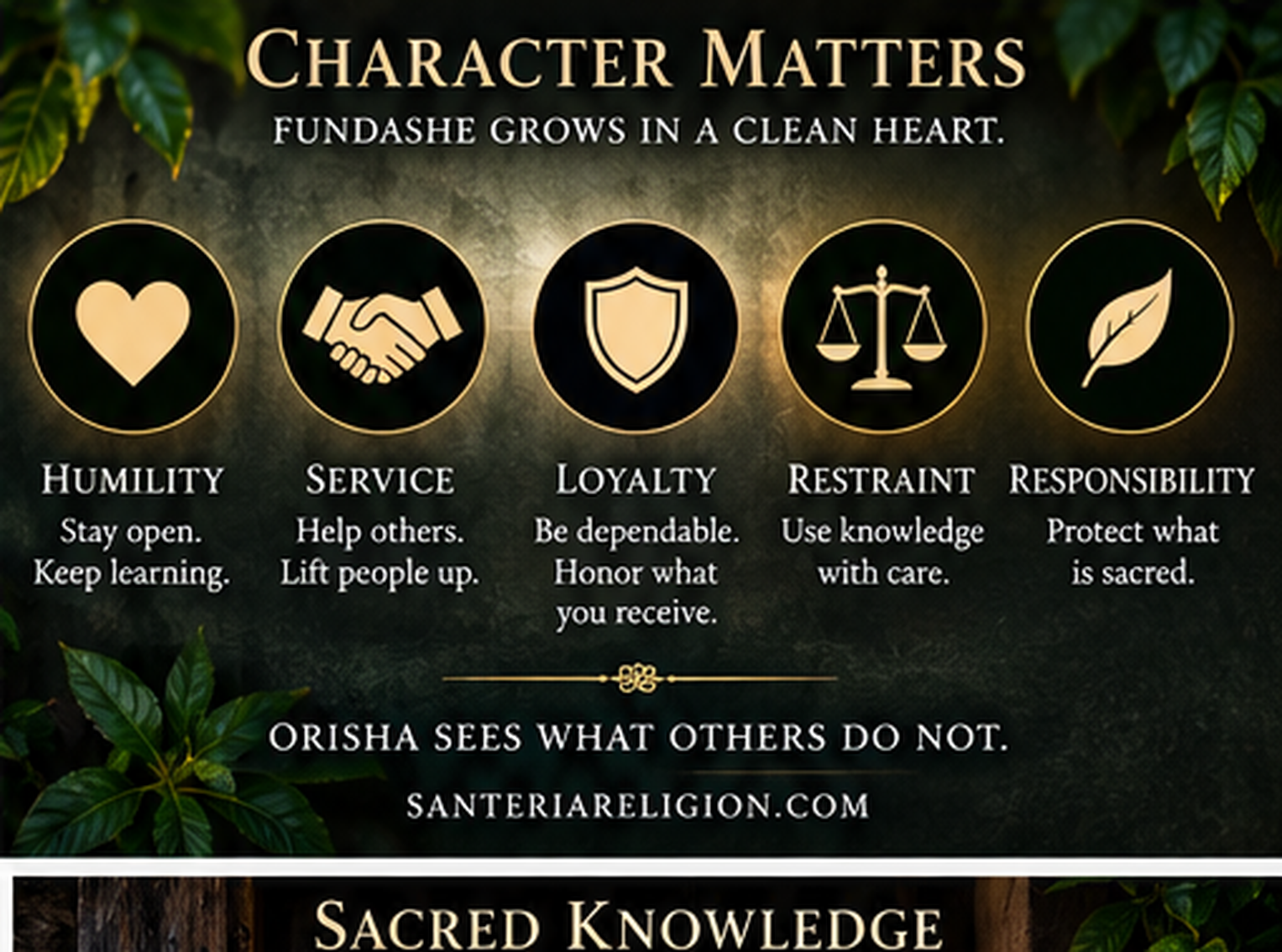
When I say that purity of heart earns more Fundashe, I do not mean human perfection.
People make mistakes.
People become angry.
People fail.
People learn slowly.
Religious growth does not require pretending to be flawless.
Purity of heart concerns intention and character.
What are you trying to do with what you were given?
Are you trying to help?
Can you admit when you are wrong?
Can you follow Orisha when the message conflicts with your preference?
Can you resist exploiting someone's fear?
Can you protect what should remain sacred?
Can you serve without constantly needing recognition?
Those questions matter.
Orisha knows the answer before we speak it.
Fundashe Requires Humility Before Mystery
There are moments in religious practice when certainty becomes dangerous.
The practitioner may strongly sense something.
Experience may support it.
An Odú may suggest it.
Still, confirmation matters.
Fundashe does not eliminate the need to ask.
It makes the practitioner understand why asking matters.
Someone who becomes convinced that every impression they have is automatically divine is vulnerable to ego.
Intuition requires discipline.
Spiritual perception requires restraint.
A practitioner should remain capable of being corrected by the shells.
That is one of the protections built into divination.
The practitioner listens.
Then asks.
Orisha decides.
Sacred Knowledge Has Boundaries
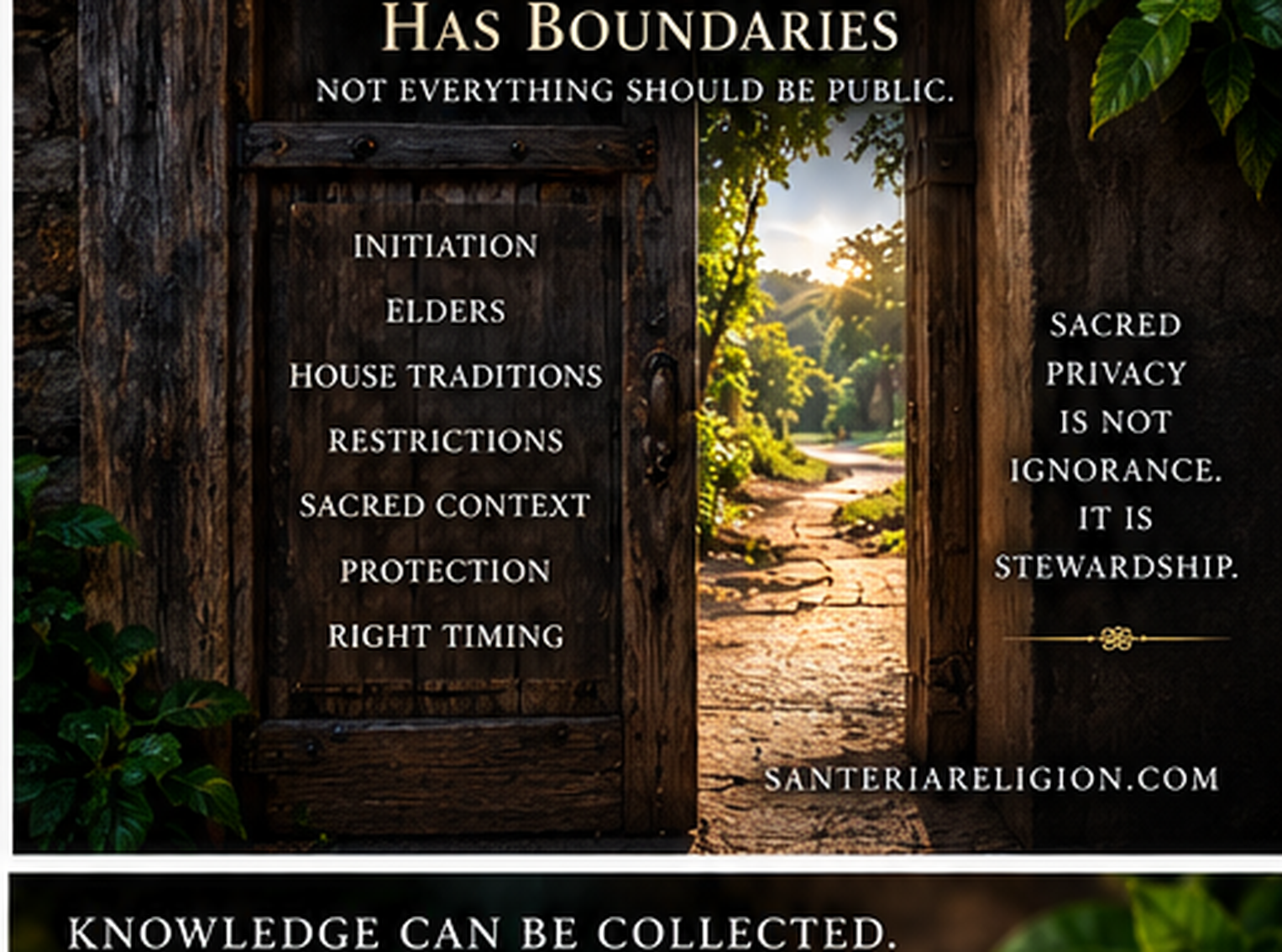
Another part of protecting Fundashe is understanding that not everything should be made public.
Our age assumes that information should be available to everyone.
Religion does not always work that way.
Some knowledge belongs to particular stages of initiation.
Some belongs to particular offices.
Some belongs inside a house.
Some is transmitted through elders.
Some requires context that cannot be captured safely in public explanation.
Sacred privacy is not ignorance.
It is stewardship.
When knowledge carries responsibility, access and responsibility have to remain connected.
Publishing everything simply because it can be published may destroy the conditions that give the knowledge meaning.
A practitioner entrusted with sacred information has an obligation to know where the boundary lies.
Study Still Matters
None of this makes scholarship unimportant.
A practitioner who refuses to study because they believe spirituality alone is sufficient creates another problem.
Memory can fail.
Stories can change.
Language can be misunderstood.
Historical claims can become distorted.
Practitioners can repeat errors.
Serious religious life benefits from serious learning.
The strongest approach, in my experience, respects both.
Study expands the mind.
Practice develops judgment.
Elders preserve lineage knowledge.
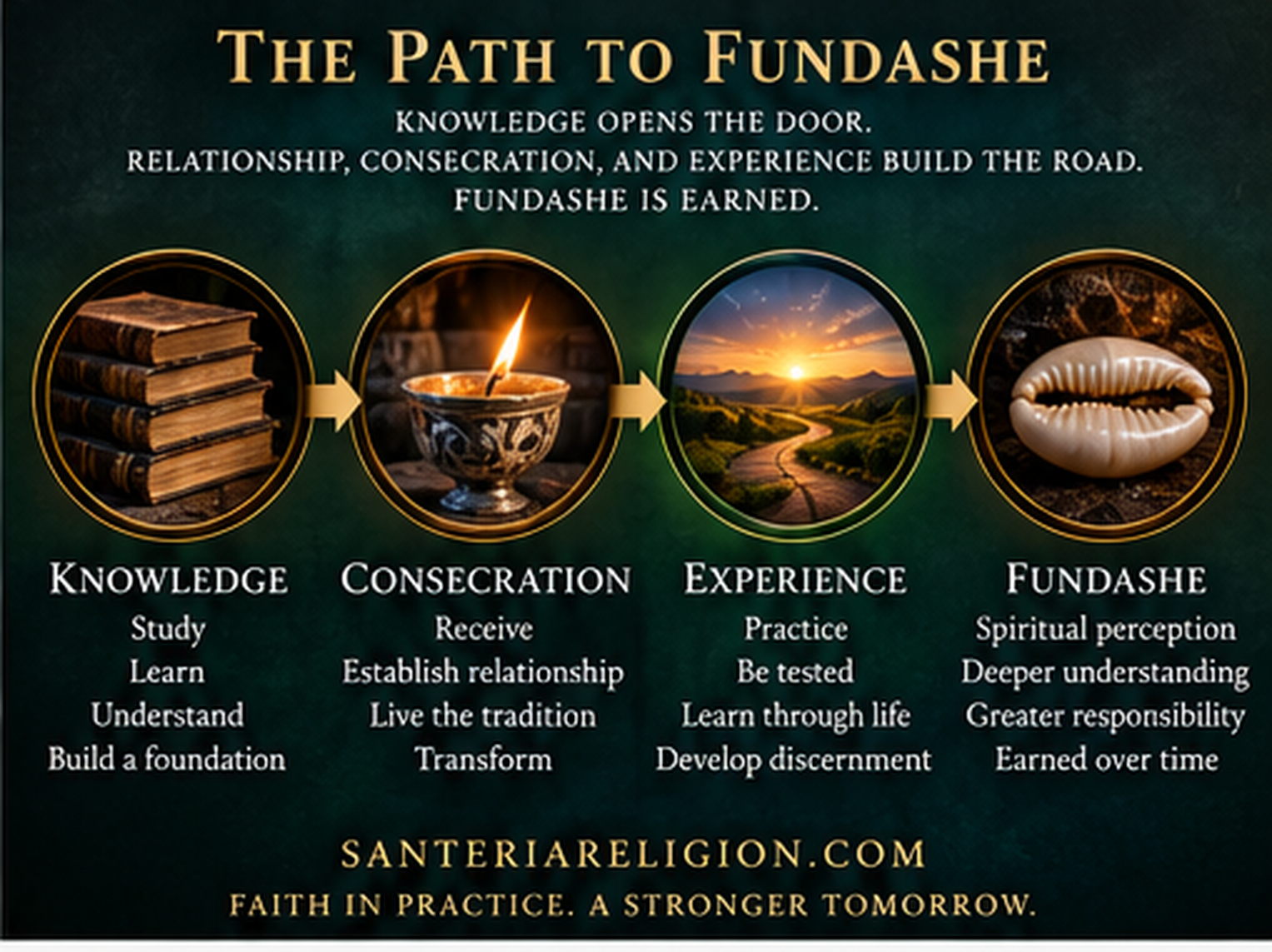
Consecration establishes religious relationship.
Experience teaches patterns.
Orisha gives what cannot simply be taken.
Those forms of knowledge can strengthen one another.
The Difference Appears During Real Problems
Fundashe becomes especially visible when situations are complicated.
A client may present one question while the reading moves somewhere else.
Several Odú may appear.
An Orisha may step forward.
The consultation may reveal a condition that was never mentioned.
A prescription may seem unusual until the sequence is understood as a whole.
This is where memorization alone becomes insufficient.
The practitioner has to understand the conversation.
A person who knows individual definitions may see fragments.
Someone with deeper spiritual understanding may recognize the road connecting them.
That does not make the practitioner infallible.
It means their capacity for interpretation has been formed by something larger than information retrieval.
Fundashe Serves People
A sacred gift has purpose.
Its purpose is not to make the practitioner important.
It exists so the practitioner can serve.
That service may involve delivering an uncomfortable message.
It may involve telling someone no.
It may require correction.
It may require patience.
It may require admitting that something has not been established.
It may require referring someone elsewhere.
It may involve helping someone during the worst period of their life.
The value of Fundashe appears in what it allows the practitioner to do responsibly for another human being.
The Gift Belongs to Orisha

This is the principle that keeps everything in perspective.
Whatever spiritual understanding I possess, I do not believe I created it alone.
I studied.
I practiced.
I made mistakes.
I learned.
I served.
I lived with Orisha.
Still, the gift ultimately belongs to them.
That understanding creates gratitude.
It also creates accountability.
If Orisha gives someone greater perception, greater Ashé, greater understanding, or deeper Fundashe, then that person has been entrusted with something.
An entrusted thing should be protected.
It should never be abused.
It should never become an excuse for cruelty or arrogance.
And it should never make the practitioner believe they have become greater than the source of the gift.
Knowledge Can Be Collected. Fundashe Must Be Earned.
Someone can build an enormous library.
They can memorize thousands of pages.
They can know every public teaching available.
That can make them knowledgeable.
Fundashe asks something else of the person.
Character.
Relationship.
Consecration.
Experience.
Humility.
Responsibility.
Service.
The willingness to listen.
The willingness to be corrected.
The discipline to protect what is sacred.
And the understanding that Orisha sees everything we would prefer to keep hidden.
That is why I believe Fundashe is rare.
That is why I believe it is an honor.
That is why it must be protected.
And that is why no book, no title, and no amount of intellectual knowledge can simply manufacture it.
The page can teach.
The elder can guide.
The ceremony can change you.
Life can test you.
But Fundashe is something Orisha decides you are ready to carry.
Maferefun Orisha.
About the Author
Keith Lawrence Miller, M.A. (Ogun Oní) is the founder of SanteriaReligion.com, an independent educational platform devoted to Santería, Regla de Ocha, Lucumí religious literacy, Diloggún, Orisha tradition, religious history, spiritual development, and the preservation of sacred boundaries.
His work draws upon lived religious experience, sustained study, practitioner knowledge, public theology, and respect for the authority of elders, godparents, lineages, and individual houses.